
Design is not just about making things look good — it’s about creating balance, harmony, and visual comfort. One powerful concept that helps designers achieve this balance is the Golden Ratio.
If you’re a student, beginner designer, or someone curious about design principles, this guide will help you understand what the golden ratio in design is, how it works, and why it matters.
At Locas Institute, Ludhiana, we teach practical design concepts that are used by professionals worldwide — and the golden ratio is one of them.
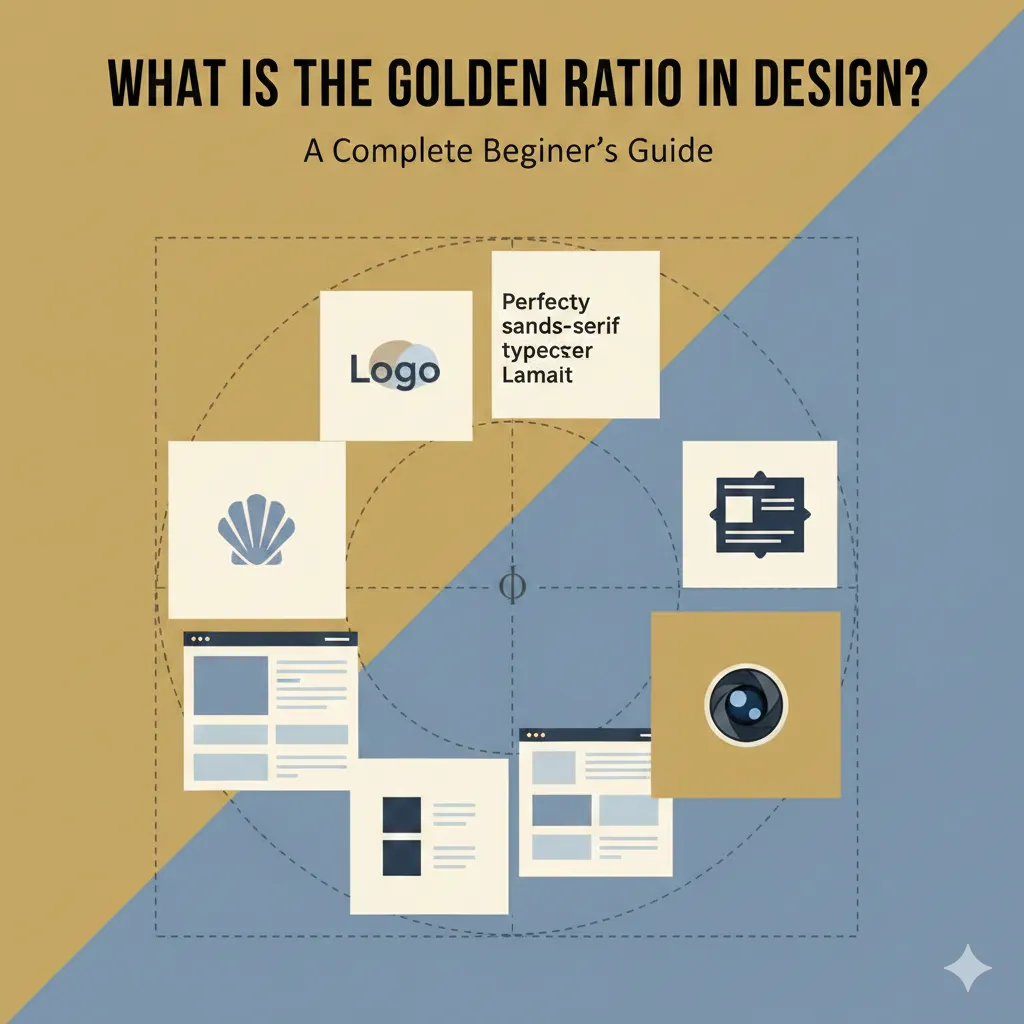
What Is the Golden Ratio?
The Golden Ratio is a mathematical ratio commonly written as 1:1.618 (also called Phi).
In simple words, it means:
A design looks more pleasing when the relationship between elements follows this proportion.
This ratio appears naturally in:
- Nature (flowers, shells, galaxies)
- Human body proportions
- Architecture
- Art and design
That’s why designs based on the golden ratio feel balanced and visually attractive.
History of the Golden Ratio in Design
The golden ratio is not a new concept.
It has been used for centuries by:
- Ancient Greek architects (Parthenon)
- Leonardo da Vinci (Vitruvian Man, Mona Lisa)
- Renaissance artists
- Modern designers in web, UI/UX, logo, and graphic design
Even today, brands and designers use the golden ratio to create designs that naturally catch the eye.
Why Is the Golden Ratio Important in Design?
The golden ratio helps designers because:
- It creates visual harmony
- It improves readability and layout flow
- It guides spacing and alignment
- It makes designs look professional and natural
Instead of guessing sizes and spacing, designers use the golden ratio as a structure for decision-making.
How the Golden Ratio Works in Design
1. Golden Ratio Formula
The ratio is:
1 : 1.618
If the smaller part is 1, the larger part is 1.618.
2. Golden Rectangle
A golden rectangle is created using the golden ratio. When divided repeatedly, it forms a spiral called the Golden Spiral.
Designers use this spiral to:
- Place important content
- Guide user attention
- Create natural visual flow
Uses of the Golden Ratio in Design
1. Golden Ratio in Graphic Design
Graphic designers use the golden ratio to:
- Design posters
- Create balanced layouts
- Align images and text
- Maintain perfect spacing
For example:
- Font size ratio (Heading vs body text)
- Image size vs white space
2. Golden Ratio in Logo Design
Many famous logos are based on the golden ratio.
Designers use it to:
- Shape logos
- Maintain symmetry
- Create scalable designs
Logos designed with the golden ratio look simple, memorable, and timeless.
3. Golden Ratio in Web Design
In web design, the golden ratio is used for:
- Page layout
- Content width
- Sidebar proportions
- Button placement
Example:
- Content area: 61.8%
- Sidebar: 38.2%
This improves user experience (UX) and keeps visitors engaged longer.
4. Golden Ratio in UI/UX Design
UI/UX designers use the golden ratio to:
- Design mobile apps
- Set padding and margins
- Adjust icon sizes
- Improve visual hierarchy
This helps users focus on important actions like buttons, forms, and CTAs.
5. Golden Ratio in Typography
Typography becomes more readable when font sizes follow the golden ratio.
Example:
- Body text: 16px
- Heading: 16 × 1.618 ≈ 26px
This creates natural text flow without visual stress.
Is the Golden Ratio Mandatory in Design?
No.
The golden ratio is a guideline, not a strict rule.
Good designers:
- Use it when needed
- Break it when creativity demands
- Combine it with usability and brand goals
At Locas Institute, we teach when to use theory and when to trust design instincts.
Tools to Use the Golden Ratio Easily
You don’t need to calculate manually. Designers use tools like:
- Adobe Illustrator & Photoshop
- Figma & Canva
- Golden Ratio Calculator
- Grid systems
These tools help apply the golden ratio quickly and accurately.
Why Design Students Should Learn the Golden Ratio
If you’re learning:
- Graphic Design
- Web Design
- UI/UX Design
- Digital Marketing
- Visual Communication
Then understanding the golden ratio will:
- Improve your design quality
- Strengthen your portfolio
- Make your work look professional
- Help you stand out in interviews
Learn Design Practically at Locas Institute, Ludhiana
At Locas Institute, we focus on real-world design skills, not just theory.
What You’ll Learn:
- Graphic & Web Design fundamentals
- UI/UX design principles
- Typography & layout systems
- Golden ratio and design grids
- Practical projects & portfolio building
Location: Ludhiana
Courses for beginners & professionals
Industry-oriented training
Join Locas Institute today and turn your creativity into a career.
Frequently Asked Questions
What is the golden ratio in simple words?
The golden ratio is a proportion (1:1.618) that makes designs look balanced, natural, and visually pleasing.
Why is the golden ratio used in design?
It helps create harmony, better layouts, and improved user experience in graphic, web, and UI/UX design.
Is the golden ratio used in modern design?
Yes, it is widely used in logo design, web design, app design, and branding even today.
Do beginners need to learn the golden ratio?
Yes. It helps beginners understand layout, spacing, and visual balance more clearly.
Where can I learn design concepts like the golden ratio in Ludhiana?
You can learn professional design concepts at Locas Institute, Ludhiana, with practical training and expert guidance.
Final Thoughts
The golden ratio is a powerful design principle that connects art, mathematics, and creativity. When used correctly, it can transform ordinary designs into visually stunning experiences.
If you want to master design the right way, start learning with the right foundation.
Join Locas Institute, Ludhiana — where creativity meets career.
To read more about it also read :10 Website Layout Best Practices for High Conversions